
Our company specializes in a diverse range of steel pipes, each tailored to meet specific industrial demands.
Carbon Steel Pipe: Made from carbon steel with a carbon content typically ranging from 0.05% to 1.35%, it is highly versatile. Produced through processes like hot rolling, cold rolling, or cold drawing from steel ingots or solid round steel, carbon steel pipes come in seamless and welded varieties. They find extensive use in infrastructure, shipbuilding, and fertilizer equipment due to their strength and pressure - bearing capabilities.
Low Temperature Steel Pipe: Engineered to perform in low - temperature environments, often below - 45 °C. These pipes, such as those conforming to ASTM A333 standard, are made of materials like low - temperature carbon steel or low - temperature alloy steel. They possess excellent impact toughness to prevent low - temperature brittle fracture. Applications include petrochemical plants, cryogenic equipment, and the transportation of ultra - low - temperature liquefied gases.
Boiler Pipe: Designed to withstand the high - pressure and high - temperature conditions within boilers. They are manufactured to strict standards to ensure safety and reliability. Boiler pipes are crucial for the efficient operation of power plants, refineries, and industrial boilers, where they transport steam and hot water.
Alloy Steel Pipe: Utilizing alloy extrusion, these pipes contain one or more alloying elements. With a wide range of applications in industries such as automobiles, ships, aerospace, and power generation, alloy steel pipes offer enhanced properties like high - temperature resistance, low - temperature resistance, and corrosion resistance.
Standards such as ASTM A335, ASTM A519, and ASTM A213 govern their production.
High Temperature Steel Pipe: Built to endure elevated temperatures, these pipes are essential in environments like furnaces, incinerators, and high - temperature processing plants. They maintain their structural integrity and mechanical properties under extreme heat, ensuring the smooth running of high - temperature operations.
Precision Steel Pipe: Characterized by tight tolerances in dimensions and wall thickness. Precision steel pipes are used in applications where accuracy is critical, such as in hydraulic systems, precision machinery, and the aerospace industry, where their precise specifications contribute to optimal performance.
一、Component composition
-
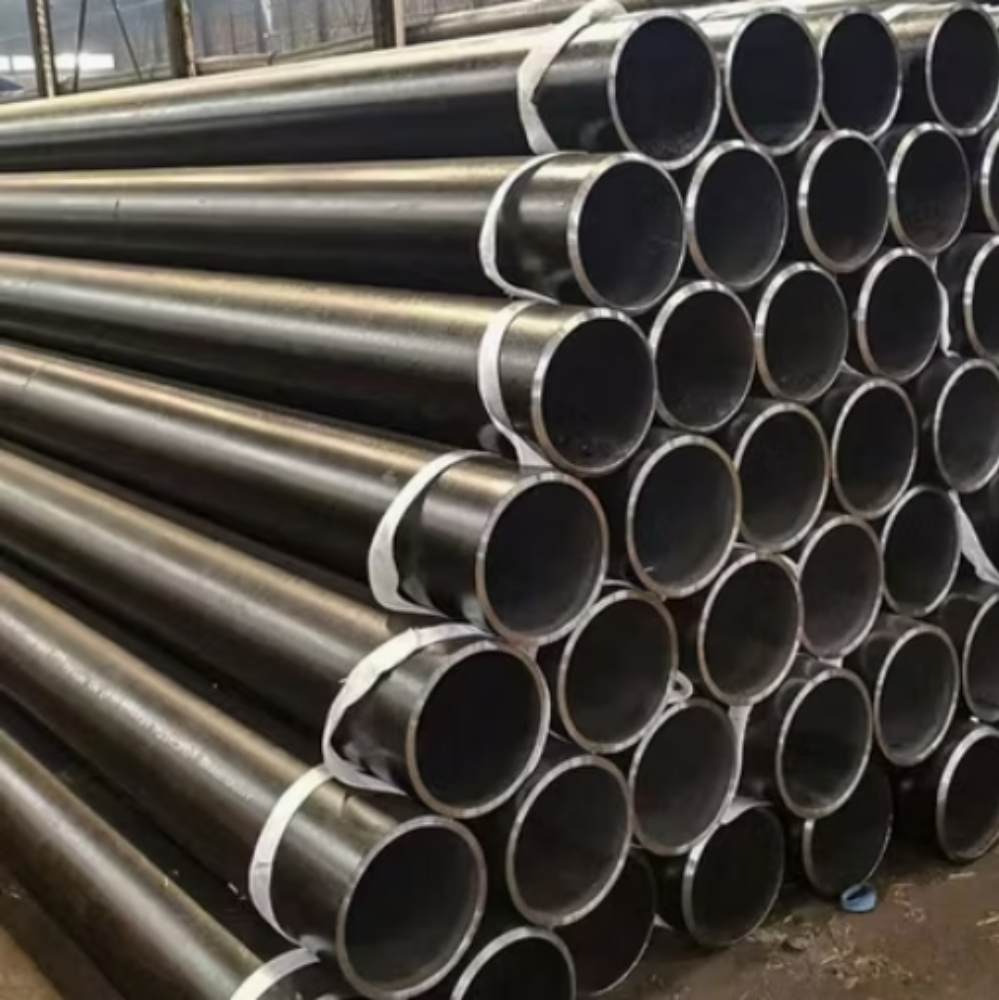
Non-alloy steel pipes(Carbon steel pipes):
Main components are (Fe)(C),carbon content usually≤2.0%(it can be divided to low carbon steel、medium carbon steel、high carbon steel).Only include minute quantity of other elements(Such as Si、Mn≤1%,S、P≤0.045%),Alloy elements(Such as Chrome、Ni、Mo etc.)Total content≤1%(It might be ignored)。
Typical representative types:Q235(low carbon steel)、20#(middle carbon steel)。
-
Alloy steel pipes:
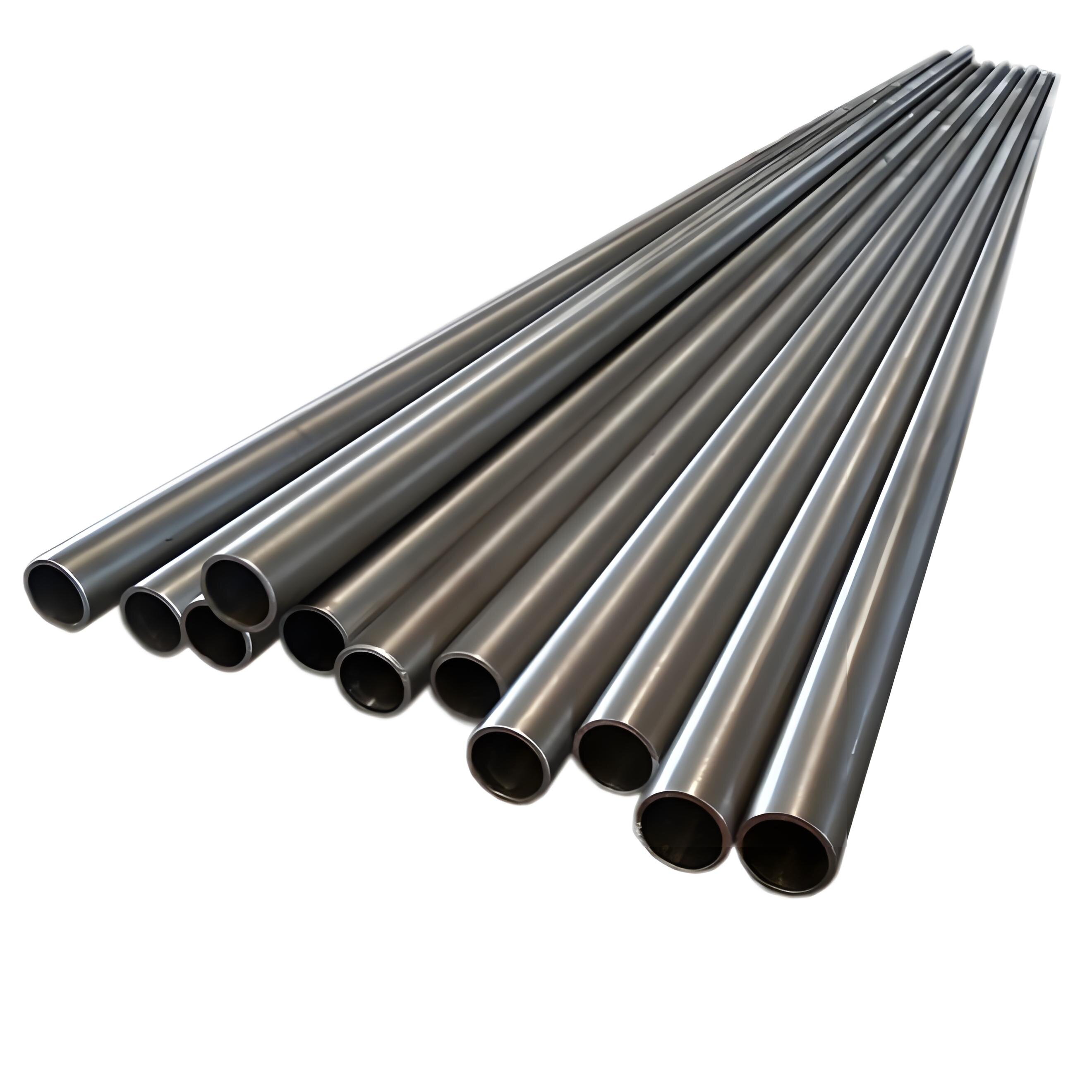
On the basis of carbon steel, alloying elements (such as chromium Cr, nickel Ni, molybdenum Mo, vanadium V, titanium Ti, niobium Nb, tungsten W, etc.) are deliberately added.,The total content of alloying elements is greater than 1% (in some high-alloy steel pipes, it can reach over 10%). By adjusting the types and proportions of alloying elements, specific properties (such as corrosion resistance, high-temperature resistance, and high strength) can be obtained.
Typical representative types:1Cr18Ni9Ti(Stainless steel)、12Cr1MoV(Chromium-Mo steel)、40Cr(Chromium steel)。
二、Performance differences
The addition of alloying elements significantly changes the microstructure and macroscopic properties of steel. The specific comparison is as follows:
|
Performance dimension |
Non-alloy(carbon steel) |
alloy steel pipes |
|---|---|---|
|
Strength |
Strength main lie on carbon content(higher carbon higher strength),but high carbon steel has high brittleness; The comprehensive strength is lower than most alloy steels |
Alloy elements (such as Cr, Mo, V) can refine grain size, form strengthening phases (such as carbides), and significantly enhance strength (especially high-temperature strength). |
|
Corrosion resistance |
Basic dependence on surface oxide film, moderate resistance to atmospheric/freshwater corrosion; Easy to rust, requiring additional protection (such as galvanizing) |
Chromium (Cr>12%), nickel (Ni) and other elements can form dense passivation films (such as stainless steel), or improve passivation ability (such as chromium molybdenum steel), with corrosion resistance far exceeding that of carbon steel. |
|
High temperature resistance |
The strength drops sharply at high temperatures (such as severe creep when>400 ℃), and is only suitable for normal or medium temperature scenarios ≤ 350 ℃. |
Chromium, molybdenum, tungsten and other elements can enhance atomic bonding strength, suppress grain growth and diffusion at high temperatures, and are suitable for high temperature (such as 500-1000 ℃) and high pressure environments (such as boiler superheater tubes) |
|
Wear resistance |
Low hardness (high carbon steel can be increased in hardness through quenching, but has high brittleness), with average wear resistance. |
Carbides formed by elements such as vanadium and titanium (such as VC and TiC) have extremely high hardness, significantly improving wear resistance (such as used in mining machinery pipelines). |
|
Welding performance |
When the carbon content is low (such as low carbon steel), the weldability is good; Medium to high carbon steel is prone to cracking during welding and requires preheating or post weld heat treatment. |
Alloy elements (such as Cr, Mo, V) are prone to form refractory oxides, which can cause hot cracks during welding; Some high alloy steels (such as austenitic stainless steel) require strict control of heat input. |
|
Processing performance |
Good cutting and cold forming (such as bending) performance (especially for low carbon steel) |
Some alloy steels (such as high chromium steel) have high hardness and a tendency towards work hardening, making cutting difficult; Austenitic stainless steel has high plasticity but significant work hardening. |
We are baodely huaian metal technology Co.,LTD. We are professional factory of carbon steel pipes under the process of cold drawn. Steel pipes include alloy and non-alloy. Size is also various, we can produce due to customers' requirements.Below is our website:
If you have any inquiry and need, feel freee to contact us as below:
Catherine
Tel:+8613776123699