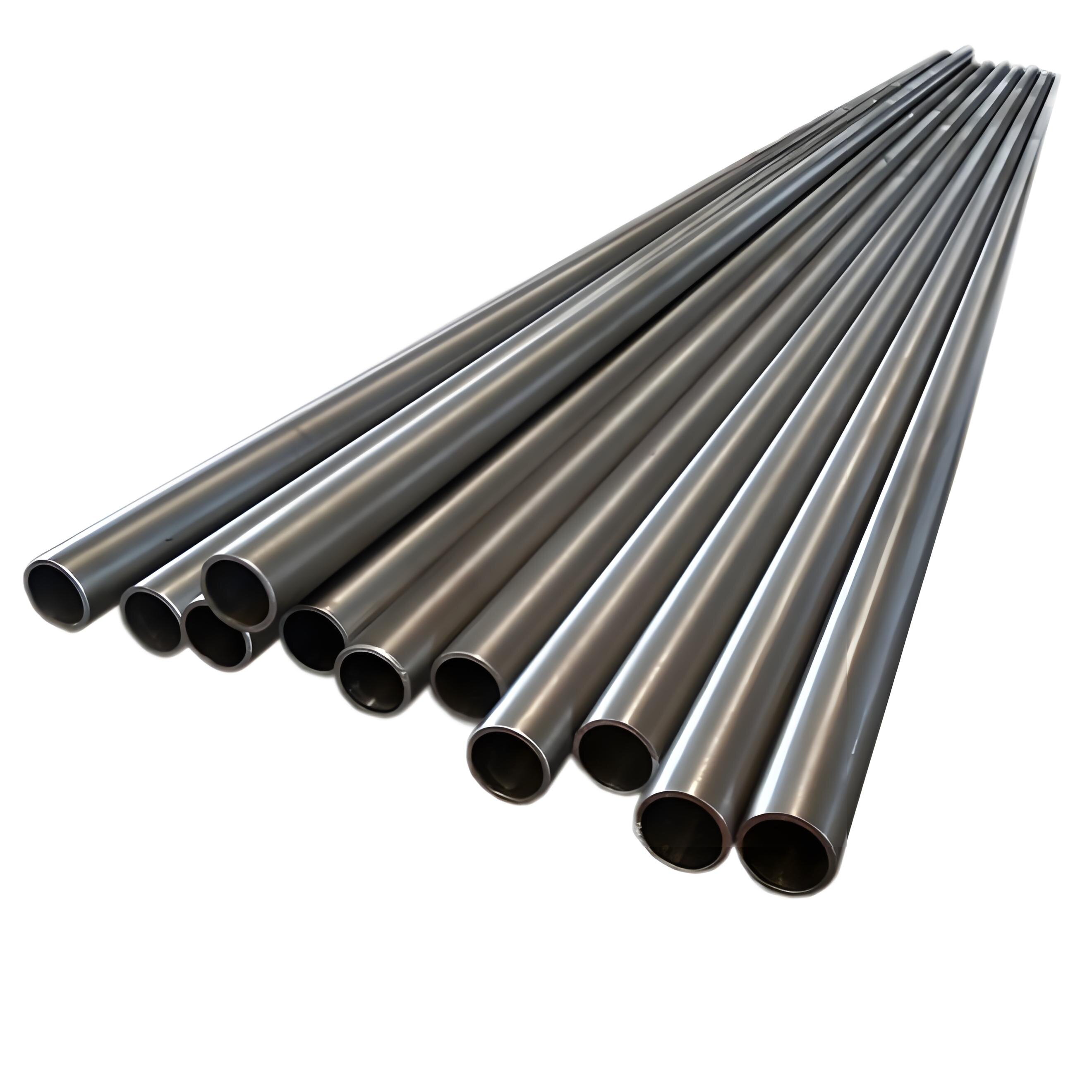
In the current wave of industrial development, various types of steel pipes play a crucial role and have become the "invisible pillars" of many industries. From infrastructure to high-end manufacturing, from energy transmission to precision instruments, Carbon Steel Pipe, Low Temperature Steel Pipe, Boiler Pipe, Alloy Steel Pipe, High Temperature Steel Pipe and Precision Steel Pipe and others are, with their unique performances, helping the industry reach new heights.
ท่อเหล็กคาร์บอนเป็นหนึ่งในท่อเหล็กที่ใช้กันอย่างแพร่หลายมากที่สุดครอบครองตำแหน่งสำคัญในอุตสาหกรรมเช่นการก่อสร้างการผลิตเชิงกลและปิโตรเคมีเนื่องจากประสิทธิภาพที่ครอบคลุมและต้นทุนค่อนข้างต่ำ โดยทั่วไปแล้วสัดส่วนมวลคาร์บอนจะต่ำกว่า 2.11%และไม่มีการเพิ่มองค์ประกอบการผสมเป็นพิเศษ แต่ก็สามารถตอบสนองความต้องการของสภาพการทำงานทั่วไปที่หลากหลาย
Whether it is the supporting components in building structures or the pipelines in the transportation of oil and gas, carbon steel pipes can function reliably. In the field of construction, with the acceleration of urbanization, the demand for carbon steel pipes in a large number of infrastructure construction projects has been continuously rising. In the oil and gas industry, the safety and stability of its transportation ensure the efficient transmission of energy.
Low-temperature steel pipes are specially designed to cope with extremely cold environments. It can still maintain excellent mechanical properties under low-temperature conditions ranging from -45 ℃ to -195℃, providing a reliable solution for low-temperature pressure vessel pipelines and low-temperature heat exchanger pipelines. In some energy extraction projects in extremely cold regions, the use of low-temperature steel pipes ensures the normal operation of equipment in harsh environments. It adopts low-sulfur, low-phosphorus, high-purity steel and undergoes calcification treatment, effectively reducing low-temperature brittleness and enhancing the impact toughness of the product. For instance, in natural gas extraction projects in the Arctic region, low-temperature steel pipes can withstand extremely low temperatures, ensuring the stable transportation of natural gas.
ท่อหม้อไอน้ำมีข้อกำหนดที่เข้มงวดสำหรับกระบวนการผลิต ตามอุณหภูมิการทำงานที่แตกต่างกันพวกเขาจะถูกจัดประเภทเป็นท่อหม้อไอน้ำทั่วไปและท่อหม้อไอน้ำแรงดันสูง ท่อหม้อไอน้ำทั่วไปส่วนใหญ่จะใช้ในการผลิตหลอดผนังน้ำ, ท่อเดือดและท่อไอน้ำร้อนมาก ฯลฯ
Their working temperatures are usually below 450℃ and they can be produced by hot rolling or cold drawing processes. High-pressure boiler tubes, on the other hand, are used in high-temperature and high-pressure environments, such as the superheater tubes and reheater tubes for manufacturing high-pressure and ultra-high-pressure boilers. They need to possess high creep strength, resistance to oxygen corrosion, and good microstructure stability. In the power industry, the quality of boiler tubes is directly related to the operational efficiency and safety of power generation equipment. With the growth of electricity demand, the research and development as well as production of high-performance boiler tubes are also constantly advancing.
Alloy steel pipes have significantly enhanced their performance by adding alloying elements. It features high strength, excellent corrosion resistance and high-temperature performance, and is often used to manufacture equipment and components that operate in harsh environments. For instance, in industries such as chemical engineering, power generation, and petroleum refining, alloy steel pipes can withstand the tests of high temperatures, high pressures, and highly corrosive media. Among them, chromium-molybdenum alloy steel pipes perform exceptionally well in high-temperature environments and are widely used in high-temperature conditions ranging from 540 to 750℃, such as high-temperature steam pipes in power plants and reaction equipment pipes in petrochemical plants. The addition of molybdenum not only enhances the strength and toughness of steel pipes, but also improves their resistance to softening and embrittlement, thereby enhancing the overall quality and service life.
High-temperature steel pipes, specially designed for high-temperature environments, can maintain stable mechanical properties and creep resistance at high temperatures. In industries such as metallurgy, glass manufacturing, and ceramics, high-temperature steel pipes are used to transport high-temperature gases and liquids or as components of heating equipment. In glass furnaces, high-temperature steel pipes are used to transport high-temperature gas to ensure the stable operation of the furnaces. Its special alloy composition and manufacturing process enable it to withstand various stresses and corrosions in high-temperature environments, providing a reliable guarantee for high-temperature industrial production.
Precision steel tubes, with their high-precision dimensional tolerances and excellent surface quality, play a crucial role in fields such as precision machinery manufacturing, automotive parts manufacturing, and aerospace. It can meet the manufacturing processes that have extremely high requirements for the dimensional accuracy and surface roughness of parts. In the manufacturing of automotive engines, precision steel tubes are used to make key components such as fuel injectors and valve guides, ensuring the efficient operation of the engine. In the aerospace field, precision steel tubes are used to manufacture hydraulic system pipes and fuel system pipes for aircraft. Their high precision and reliability are crucial for the safe flight of aircraft.
Recently, major steel enterprises and research institutions have been increasing their investment in the research and development of various types of steel pipes, striving to enhance product performance, reduce production costs and improve production efficiency. Through technological innovation, we continuously develop new manufacturing processes and material formulas to meet the market's growing demand for high-performance steel pipes. With the continuous advancement of technology and the sustained development of industry, various types of steel pipes are bound to demonstrate greater value in more fields, promoting the continuous progress of related industries.