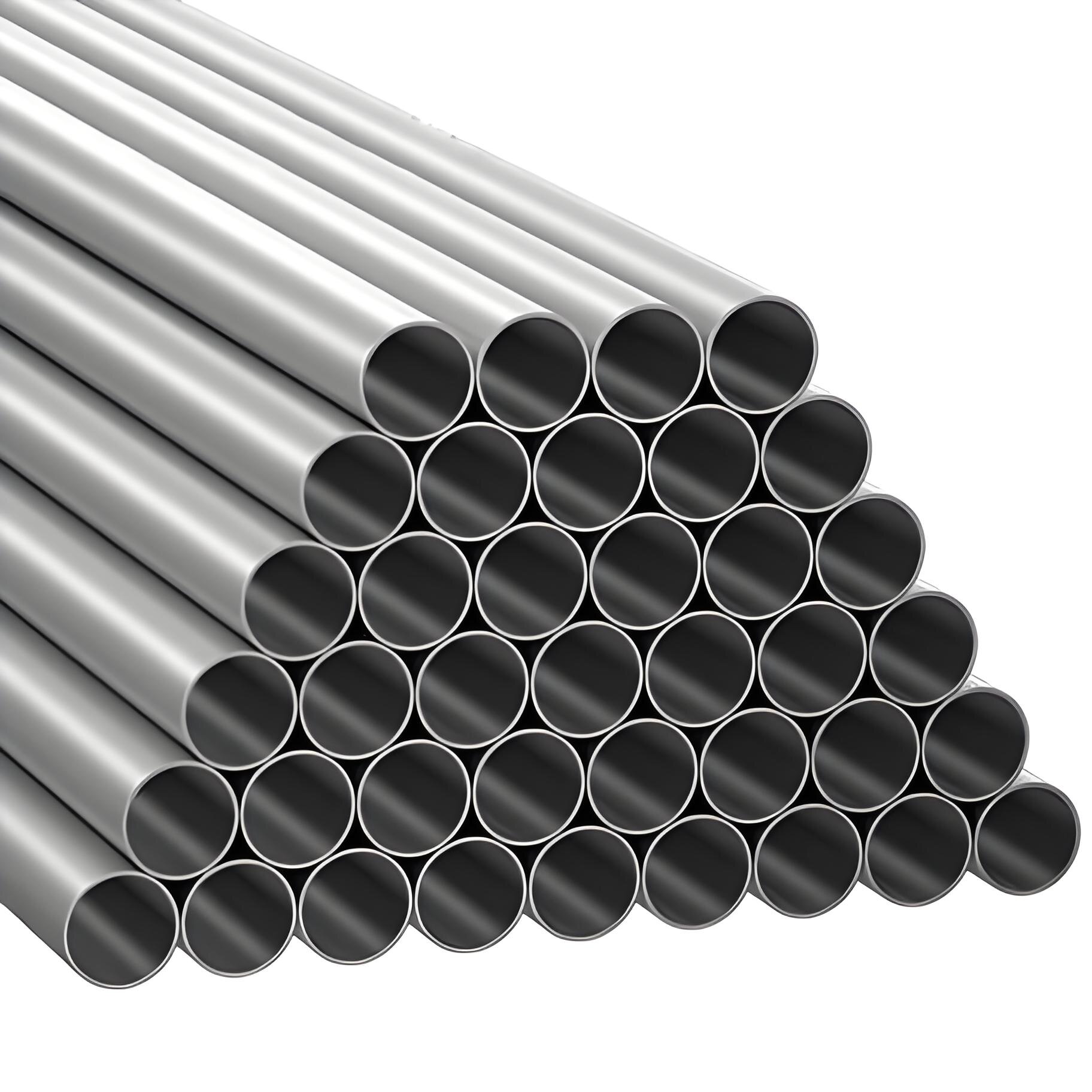
With the advancement of global industrial upgrading and green development strategies, six core categories of steel pipes—Carbon Steel Pipe, Low Temperature Steel Pipe, Boiler Pipe, Alloy Steel Pipe, High Temperature Steel Pipe, and Precision Steel Pipe—are experiencing a new round of demand upgrading and technological breakthroughs. They are demonstrating broader application prospects in energy, infrastructure, high-end manufacturing, and other fields, injecting strong impetus into the development of the steel pipe industry.
Driven by Policies, the Green Transformation of Carbon Steel Pipes Accelerates
Under the dual impetus of the "dual carbon" policy and policies for strengthening weak links in infrastructure, Carbon Steel Pipes, as the "main force" in the infrastructure sector, are accelerating their transformation toward greenization and higher cost-effectiveness. Recently, a number of domestic iron and steel enterprises have launched Carbon Steel Pipes produced with "ultra-low emissions". By optimizing the smelting process, energy consumption and carbon emissions during production are reduced. The utilization rate of such pipes in projects like municipal pipe networks and bridge supports has increased by 15% year-on-year. For example, a urban underground utility tunnel project in a central province adopted low-carbon Carbon Steel Pipes that comply with the GB/T 8163 standard. These pipes not only meet the strength requirements of the utility tunnel for pipes but also received local policy subsidies due to their low-carbon properties. Meanwhile, for scenarios such as rural water conservancy irrigation and small-to-medium-sized gas transmission pipelines, lightweight Carbon Steel Pipes have emerged. Their weight is 8% lower than that of traditional pipes, and installation efficiency is increased by 20%, effectively reducing the overall cost of infrastructure projects.
Demand for Low Temperature Steel Pipes Extends to High-End Fields
With the rapid expansion of the global LNG (liquefied natural gas) industry and the penetration of cold chain logistics into remote areas, the demand for Low Temperature Steel Pipes is extending from traditional energy fields to high-end manufacturing fields. In the LNG industry chain, Low Temperature Steel Pipes capable of withstanding ultra-low temperatures of -196°C have become core consumables. An international energy giant selected Low Temperature Steel Pipes made of ASTM A333 Grade 9 material for its LNG transportation pipeline project in Southeast Asia. Relying on excellent low-temperature toughness and fatigue resistance, these pipes ensure the safety of LNG during long-distance transportation. After the project is put into operation, it will meet 30% of the local natural gas demand. In addition, in the biopharmaceutical industry, the application proportion of Low Temperature Steel Pipes in low-temperature equipment for vaccine freezing, storage, and transportation has increased significantly. Such pipes must pass strict cleanliness testing, with the inner wall roughness controlled at Ra ≤ 0.8μm, providing guarantees for the quality and safety of biological agents.
Technological Iteration of Boiler Pipes Adapts to Energy Structure Adjustment
As the energy structure shifts toward clean energy, the technological R&D of Boiler Pipes focuses on "high efficiency and energy conservation" and "multi-fuel adaptability". In the field of biomass-fired power plant boilers, new-type Boiler Pipes adopt wear-resistant alloy coatings, which can resist particle erosion caused by the combustion of biomass fuels. Their service life is 50% longer than that of traditional Boiler Pipes. In a domestic biomass power generation project, after 18 months of continuous operation, the wall wear of such installed Boiler Pipes was only 1/3 of that of traditional pipes, greatly reducing the frequency of equipment maintenance. At the same time, for boilers using a mixture of hydrogen and natural gas for combustion, Boiler Pipes have improved hydrogen embrittlement resistance by adjusting the material composition. Currently, they have been successfully applied in pilot power plant boilers, providing hardware support for the diversified utilization of clean energy.
Demand for High-End Alloy Steel Pipes Continues to Rise
In high-end manufacturing fields such as aerospace and deep-sea equipment, the demand for Alloy Steel Pipes shows a trend of "high parameters and customization". A leading aircraft engine manufacturer recently developed a new-type turbofan engine, which uses high-temperature Alloy Steel Pipes with a nickel content of 25% to transport high-temperature fuel inside the engine. These pipes can maintain stable mechanical properties at a high temperature of 800°C, meeting the extreme working condition requirements of the engine. In the field of deep-sea oil and gas exploitation, corrosion-resistant Alloy Steel Pipes against seawater have become key components. The super duplex steel Alloy Steel Pipes used in a deep-sea drilling platform have been in service for 3 years in a 3,000-meter deep-sea environment without obvious corrosion, breaking the technological monopoly of similar foreign products. In addition, with the increase in the power of new energy vehicle motors, the demand for Alloy Steel Pipes used in motor cooling systems is growing. Such pipes need to have high thermal conductivity and lightweight
characteristics, and the current market scale is expanding at an annual rate of 20%.
High Temperature Steel Pipes Empower the Upgrading of the New Energy Industry
In new energy fields such as photovoltaic and solar thermal power generation, the application scenarios of High Temperature Steel Pipes are constantly expanding. In tower-type solar thermal power plants, High Temperature Steel Pipes used for transporting molten salt need to withstand the corrosion of high-temperature molten salt at 565°C. A domestic solar thermal power plant adopted High Temperature Steel Pipes made of Hastelloy C276 material. Through a special heat treatment process, the molten salt corrosion rate is controlled below 0.02mm per year, ensuring the long-term stable operation of the molten salt circulation system. In the field of photovoltaic silicon material production, High Temperature Steel Pipes are used as heating pipes in silicon material reduction furnaces. Their high-temperature oxidation resistance directly affects the purity of silicon materials. A new-type High Temperature Steel Pipe used by a silicon material enterprise has increased the purity of silicon materials to 99.9999%, helping the conversion efficiency of photovoltaic modules exceed 26%.
Cross-Border Applications of Precision Steel Pipes Open Up New Spaces
Beyond traditional automotive and medical fields, Precision Steel Pipes are entering emerging fields such as electronics and new energy through cross-border applications. In semiconductor manufacturing equipment, Precision Steel Pipes used for transporting ultra-high-purity gases need to meet the requirements of "zero leakage and no impurities". A domestic semiconductor equipment manufacturer adopted Precision Steel Pipes with an inner wall roughness of Ra ≤ 0.2μm, and the gas transmission purity reaches 99.9999999%, successfully replacing imported products. In the field of sodium-ion battery production, Precision Steel Pipes are used in the rolling dies of battery tabs, with their dimensional tolerance controlled within ±0.005mm, ensuring the uniformity of tab thickness. Currently, they have been applied in batches by a number of battery enterprises. In addition, in smart wearable devices, lightweight Precision Steel Pipes are used to make device frames. Relying on high-precision bending performance, they enable the ultra-thin design of devices, providing more possibilities for consumer electronics innovation.
Currently, the steel pipe industry is in a period of overlapping technological innovation and demand upgrading. The in-depth development of Carbon Steel Pipes, Low Temperature Steel Pipes, Boiler Pipes, Alloy Steel Pipes, High Temperature Steel Pipes, and Precision Steel Pipes in their respective segmented fields not only promotes the high-quality development of the industry itself but also becomes an important force supporting global industrial upgrading and green transformation. In the future, with further breakthroughs in materials science and manufacturing processes, steel pipe products will play a key role in more high-end fields, and the industry has broad development prospects.